
Pakistan’s SIM database is one of the largest telecom databases in South Asia. With over 190 million mobile subscribers across multiple telecom operators, the amount of data stored about SIM ownership, registration details, and usage patterns is enormous. This database is maintained by the Pakistan Telecommunication Authority (PTA) and the individual telecom operators, and it plays a vital role in national security, crime prevention, and consumer protection.
For ordinary citizens, accessing SIM database information has traditionally been difficult. The government databases are not directly accessible to the public, and getting information from telecom operators requires visiting their offices and going through lengthy procedures. However, the rise of online platforms has changed this situation dramatically.
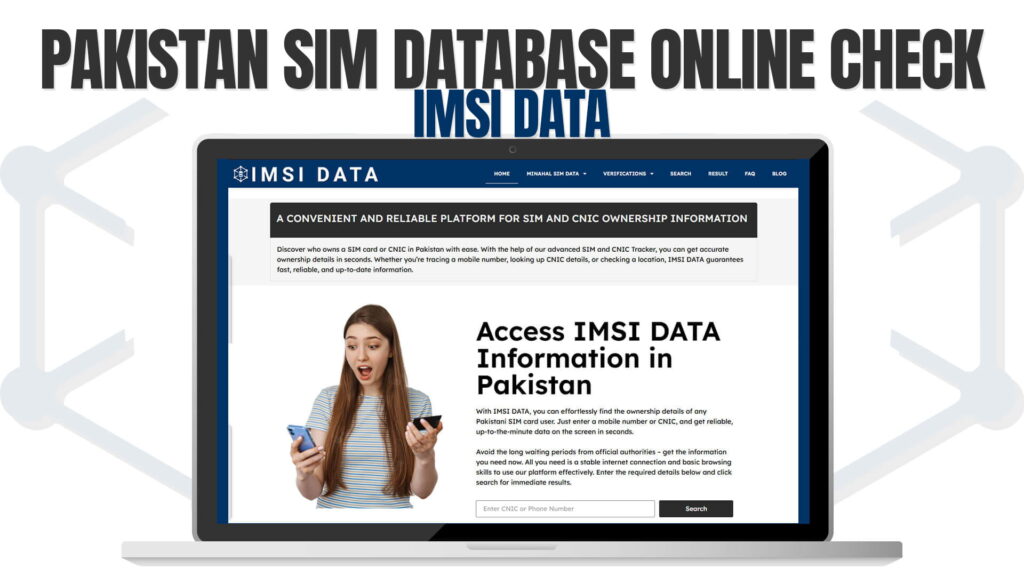
IMSI Data is a leading platform that provides Pakistani citizens with easy access to SIM database information. The platform allows users to check SIM ownership details, verify CNIC registrations, track IMEI numbers, and access fresh number details, all from the convenience of their web browser. In this comprehensive article, we will explore everything about Pakistan’s SIM database, how it works, and how IMSI Data makes this information accessible to everyone.
What is Pakistan’s SIM Database?
Pakistan’s SIM database is a centralized system that stores information about every registered SIM card in the country. This database contains the registration details of hundreds of millions of SIM cards issued by all telecom operators operating in Pakistan. It is one of the most comprehensive telecom databases in the world.
The database stores various types of information for each SIM card. This includes the phone number assigned to the SIM, the CNIC number of the registered owner, the name and personal details of the owner, the telecom operator that issued the SIM, the date of registration, the biometric verification status, and the current activation status of the SIM.
The PTA maintains a central registry that aggregates data from all telecom operators. This central registry is part of the DIRBS (Device Identification, Registration, and Blocking System) and serves as the master database for all SIM related information. Each telecom operator also maintains its own database for its subscribers, which is synced with the PTA central registry.
The SIM database is interconnected with NADRA’s national identity database. When a person registers a SIM, their biometric data is verified against NADRA’s records. This interconnection ensures that every SIM card can be traced back to a verified individual, which is crucial for security and law enforcement purposes.
Understanding how this database works helps you appreciate the importance of keeping your SIM registration information accurate and up to date. It also highlights why platforms like IMSI Data are so valuable. They provide a bridge between the complex government databases and ordinary citizens who need to access their SIM information.
How Do SIM Databases Work in Pakistan?
The technical workings of Pakistan’s SIM database involve multiple interconnected systems that work together to manage the enormous amount of telecom data. Understanding these systems helps you appreciate the complexity of SIM management and the value of accessible platforms like IMSI Data.
At the core of the system is the Home Location Register (HLR), which is maintained by each telecom operator. The HLR stores information about every subscriber on the network, including their phone number, SIM card details, service subscriptions, and current location on the network. When you make a call or connect to the internet, the HLR is consulted to authenticate your SIM and route your communication.
The IMSI (International Mobile Subscriber Identity) number plays a key role in this system. Every SIM card has a unique IMSI number that is stored on the SIM’s chip. When your phone connects to a network, it transmits the IMSI number, which the network uses to identify you. This is different from your phone number, which is a separate identifier used for routing calls.
The Authentication Center (AuC) works alongside the HLR to verify that a SIM card is genuine. It uses encryption keys stored on the SIM to perform authentication checks every time the SIM connects to the network. This prevents unauthorized SIMs from accessing the network.
The PTA’s central database aggregates information from all operators’ databases. This centralized view allows the PTA to enforce regulations, manage the DIRBS system for device verification, track SIM registrations across all networks, and respond to law enforcement requests for subscriber information.
IMSI Data accesses information from these database systems to provide users with SIM ownership details, IMEI status checks, and fresh number information. The platform at imsidata.com/search makes it possible for ordinary users to query these complex databases through a simple and intuitive interface.
How to Access Pakistan’s SIM Database Using IMSI Data
IMSI Data provides the most user-friendly way to access SIM database information in Pakistan. The platform offers several different lookup tools, each designed for a specific type of query.
SIM Ownership Search
The primary search feature at imsidata.com/search allows you to look up SIM ownership information using either a phone number or a CNIC number. When you search by phone number, the system returns the ownership details of that specific SIM. When you search by CNIC number, it shows all SIM cards registered against that CNIC. This dual search capability makes the platform versatile and useful for different types of queries.
IMEI Tracking
The IMEI tracking feature allows you to check the status of any mobile phone using its IMEI number. The database returns information about the phone’s brand, model, registration status with PTA, and whether it has been reported as stolen or blocked. This feature essentially queries the DIRBS database to give you comprehensive device information.
Fresh Number Details
The Fresh Number Details section provides information about recently registered numbers. This is useful for verifying new SIM card registrations and ensuring that all the details are correct. The feature queries the database for the most recent registration information, giving you up to date details about new numbers.
All these features work through a simple web interface. You do not need to download any software, create an account, or visit any office. Just open your web browser, go to the relevant IMSI Data page, enter the information you want to search, and get instant results. The platform is designed to be accessible to everyone, regardless of their technical knowledge.
Why Are SIM Databases Important for Pakistan?
SIM databases serve multiple critical functions in Pakistan. Their importance extends far beyond simple record keeping and touches on national security, economic development, and social welfare.
National Security: The SIM database is a powerful tool for national security. Intelligence agencies and law enforcement use SIM registration data to track criminal activities, monitor suspected terrorists, and investigate crimes. The ability to trace a phone call back to a verified individual through the SIM database has been instrumental in solving countless criminal cases and preventing security threats.
Crime Prevention and Investigation: When a crime is committed using a mobile phone, the SIM database allows investigators to identify the caller or sender. This capability has made it much harder for criminals to operate anonymously using mobile phones. The threat of being traced through the SIM database acts as a deterrent against phone-based crimes.
Financial Inclusion: Pakistan’s growing mobile banking sector relies on SIM databases for customer verification. Services like JazzCash, Easypaisa, and other mobile wallets use SIM registration data to verify user identities before allowing financial transactions. This has enabled millions of unbanked Pakistanis to access financial services through their mobile phones.
Consumer Protection: SIM databases protect consumers from fraud and identity theft. By maintaining accurate records of who owns each SIM card, the database helps prevent unauthorized use of people’s identities. Consumers can verify their SIM ownership through platforms like IMSI Data and take action if they discover unauthorized registrations.
Government Service Delivery: The government uses SIM registration data to deliver services to citizens. Programs like the Ehsaas emergency cash transfers, Benazir Income Support Program, and other welfare initiatives use mobile numbers to reach beneficiaries. The accuracy of the SIM database ensures that these services reach the right people.
Telecom Regulation: The PTA uses the SIM database to regulate the telecom industry effectively. It can monitor SIM registration trends, enforce registration requirements, manage device verification through DIRBS, and ensure that telecom operators comply with regulations.
Data Privacy and SIM Databases in Pakistan
With so much personal information stored in SIM databases, data privacy is a major concern. Understanding how your data is protected and what rights you have is important for every citizen.
The Pakistan Telecommunication (Re-organization) Act includes provisions for the protection of subscriber data. Telecom operators are required to keep subscriber information confidential and are not allowed to share it with unauthorized parties. Violations of these provisions can result in penalties for the telecom operators.
The Prevention of Electronic Crimes Act (PECA) 2016 also provides legal protection for personal data stored in electronic systems including SIM databases. Unauthorized access to these databases is a criminal offense that carries significant penalties.
NADRA has its own data protection protocols to safeguard the biometric and personal data used in SIM verification. The biometric data collected during SIM registration is encrypted and stored securely to prevent unauthorized access.
Platforms like IMSI Data handle user queries with care and respect for privacy. The platform provides SIM ownership information for legitimate verification purposes while implementing security measures to prevent misuse of the data. Users can access information about their own SIMs without concerns about their search queries being exposed.
Despite these protections, data breaches and unauthorized access remain risks. This is why it is important for citizens to monitor their SIM registrations regularly. By checking your CNIC status on IMSI Data, you can quickly detect if your data has been misused for unauthorized SIM registrations.
The Evolution of SIM Databases in Pakistan
Pakistan’s SIM database has undergone significant evolution since the early days of mobile telephony. Understanding this history helps appreciate the current state of the system and what the future might hold.
In the early 2000s, SIM registration in Pakistan was minimal. You could buy a SIM card from almost anywhere without providing any identification. The databases maintained by telecom operators were basic and often inaccurate. This lack of regulation led to a proliferation of unregistered SIMs that were frequently used for criminal activities.
The first major change came when the government mandated CNIC-based SIM registration. All telecom operators were required to collect CNIC information from their subscribers. While this was a significant step forward, the system had weaknesses. Fake CNICs could be used, and there was no biometric verification to confirm the identity of the person buying the SIM.
The introduction of biometric verification was a game changer. By requiring fingerprint verification against the NADRA database, the government made it much harder to register SIMs with fake identities. This led to a massive re-verification drive where millions of SIMs that could not be verified were deactivated.
The launch of DIRBS added another layer of sophistication to the database system. By tracking IMEI numbers alongside SIM registrations, the PTA could now monitor both the SIM card and the device it was used in. This made it possible to block stolen phones and identify counterfeit devices.
Today, Pakistan’s SIM database is a sophisticated system that integrates data from multiple sources including telecom operators, NADRA, and PTA. The system handles billions of transactions daily and supports critical services like mobile banking, government aid distribution, and law enforcement. Online platforms like IMSI Data have made this data accessible to ordinary citizens, creating a more transparent and secure telecom ecosystem.
Practical Uses of SIM Database Information for Citizens
SIM database information has many practical applications for ordinary Pakistani citizens. Knowing how to use this information can help you protect yourself and make better decisions in various situations.
Verifying Unknown Callers: When you receive a call from an unknown number, you can use IMSI Data to look up the owner of that number. This is particularly useful when you receive suspicious calls claiming to be from banks, government offices, or delivery services. A quick check can help you determine if the caller is legitimate.
Protecting Against Fraud: If you receive messages or calls asking for personal information, banking details, or OTP codes, checking the caller’s SIM ownership can help you verify their identity. Scammers often use SIMs registered to fake identities, and a database check can reveal inconsistencies.
Business Verification: Before doing business with someone you met online or through a classified ad, you can verify their phone number through the SIM database. This adds an extra layer of due diligence and helps you avoid dealing with scammers or fraudsters.
Monitoring Your Digital Identity: By regularly checking your CNIC on IMSI Data, you can monitor your digital identity. You will know exactly how many SIMs are registered on your CNIC and can quickly detect any unauthorized activity. This proactive monitoring is one of the best ways to protect yourself from identity theft.
Resolving Disputes: In cases of phone number disputes, such as when a recycled number causes confusion, SIM database information can help clarify who the current owner of a number is. This is useful for resolving misunderstandings and ensuring that the right person is associated with each number.
Resources for Learning More About SIM Databases
If you want to learn more about SIM databases and related topics in Pakistan, here are some excellent resources to explore.
SIM Databases is a dedicated platform that provides in-depth information about SIM database technology, data management, and telecom regulations. It is an excellent resource for anyone who wants to understand the technical aspects of how SIM databases work.
For practical SIM ownership verification and management, SIM Ownership Net and SIM Ownership Org provide useful guides, tools, and information. These platforms focus on helping users manage their SIM registrations and protect their identity.
SIM Details offers technical information about SIM cards, including how they work, the different types of SIM cards, and the security features built into modern SIMs. HamariWeb Info covers a broad range of telecom topics in Pakistan and is a great general resource for staying informed about the telecom industry.
The Future of SIM Databases in Pakistan
As technology continues to evolve, Pakistan’s SIM databases are expected to undergo significant transformations in the coming years. Several trends and developments will shape the future of how SIM data is stored, managed, and accessed.
Cloud Based Infrastructure: Telecom operators are gradually moving their database infrastructure to cloud platforms. Cloud based databases offer better scalability, reliability, and performance. This means faster query responses and better availability for services like IMSI Data that access these databases.
Artificial Intelligence Integration: AI and machine learning algorithms are being integrated into SIM database management systems. These algorithms can detect patterns of fraudulent registrations, predict potential security threats, and automate many of the manual processes currently involved in database management. AI could also improve the accuracy of platforms like IMSI Data by providing more intelligent search results.
Blockchain for Data Integrity: Blockchain technology could be used to create tamper proof records of SIM registrations. Each registration event would be recorded on a distributed ledger, making it impossible to alter records after they are created. This would add an unprecedented level of security and trust to the SIM database system.
eSIM Database Management: As eSIMs become more common in Pakistan, the database systems will need to evolve to handle the unique characteristics of embedded SIMs. Unlike physical SIMs that are tied to a specific card, eSIMs can be provisioned and managed remotely, requiring new database structures and management protocols.
Real Time Analytics: Future SIM databases will likely offer real-time analytics capabilities. This means the PTA and telecom operators will be able to monitor SIM registration patterns in real time, detect anomalies instantly, and respond to security threats much faster than is currently possible.
Enhanced User Access: Platforms like IMSI Data are expected to offer even more features in the future, including historical registration data, automated monitoring and alerts, integration with other identity verification systems, and more detailed analytics. These improvements will give citizens greater control over their SIM information and better tools for protecting their digital identity.
Best Practices for Managing Your SIM Database Records
Maintaining accurate and up to date SIM database records is important for your personal security and digital wellbeing. Here are some best practices that every Pakistani mobile user should follow.
Make monthly checks on your CNIC’s SIM registration a habit. Set a reminder on your phone to check your CNIC on IMSI Data at the beginning of every month. This regular monitoring helps you catch unauthorized registrations early before they can cause harm.
Keep a personal record of all your registered SIM cards. Maintain a simple list or spreadsheet that includes the phone number, operator, purchase date, and purpose for each SIM. Compare this list with the IMSI Data results during your monthly checks.
Ensure all your active SIM cards have correct registration information. If you notice any discrepancies, contact the telecom operator immediately to get them corrected. Incorrect registration data can cause problems with banking services and government programs.
Deactivate SIM cards that you no longer use promptly. Dormant SIM cards are a security risk because they could potentially be exploited without your knowledge. Contact the telecom operator to formally deactivate any unused SIMs.
Report any suspicious activity related to your SIM registrations immediately. If you find unauthorized SIMs on your CNIC, report them to PTA and the telecom operator right away. Quick reporting helps prevent further misuse of your identity.
Use all the tools available on IMSI Data to maintain a comprehensive view of your mobile identity. The SIM ownership search shows your SIM registrations, the IMEI tracking checks your device status, and Fresh Number Details verifies new registrations. Together, these tools give you complete control over your SIM database records.
The Pakistan SIM database is a centralized system that stores registration information for every SIM card in the country. It is primarily maintained by the PTA through the DIRBS system, with each telecom operator maintaining its own subscriber database that syncs with the central registry. The database includes SIM owner details, CNIC information, and activation status.
The easiest way to access SIM database information is through IMSI Data at imsidata.com/search. Simply enter your phone number or CNIC number and the platform will show you the relevant records from the database. You can also check IMEI status at imsidata.com/imei-tracking and fresh number details at imsidata.com/fresh-number-details.
Yes, it is legal to check SIM ownership information for legitimate purposes such as verifying your own SIM registrations, checking for unauthorized SIMs on your CNIC, or verifying the identity of a caller. Platforms like IMSI Data provide this service for legitimate verification purposes. However, using this information for stalking, harassment, or other illegal activities is prohibited by law.
IMSI Data sources its information from reliable databases and strives to provide the most accurate and up to date information possible. The accuracy of the results depends on the accuracy of the underlying telecom databases. In the vast majority of cases, the information returned by IMSI Data accurately reflects the current registration status of SIM cards and devices.
Your SIM registration information cannot be removed from the database as long as you have active SIM cards. This information is required by law for all active SIMs in Pakistan. However, when you deactivate a SIM card, the active record is updated to reflect the deactivation. If you want to minimize your data in the database, deactivate any SIM cards you no longer use.
Conclusion
Pakistan’s SIM database is a critical piece of the country’s telecom infrastructure. It supports national security, enables financial services, facilitates government programs, and protects consumers from fraud. As the database continues to evolve with new technologies and features, its role in Pakistani society will only become more important.
For ordinary citizens, having access to SIM database information is essential for protecting their identity and managing their mobile services. IMSI Data bridges the gap between complex government databases and everyday users, providing a simple, fast, and reliable way to access SIM ownership information.
Whether you need to check SIM cards registered on your CNIC, verify an unknown number, track a device through its IMEI number, or check fresh number details, IMSI Data has the tools you need. Take advantage of these free and accessible tools to stay informed and protected. Your digital security depends on your awareness, and IMSI Data empowers you with the information you need to stay safe in the digital age.